
You opened a CD, the term ended, and… nothing seemed to happen. Did the bank send your money back? Reinvest it? The answer catches a lot of savers off guard — and getting it wrong quietly costs real money. Here’s exactly how CD renewal works and how to stay in control of it.
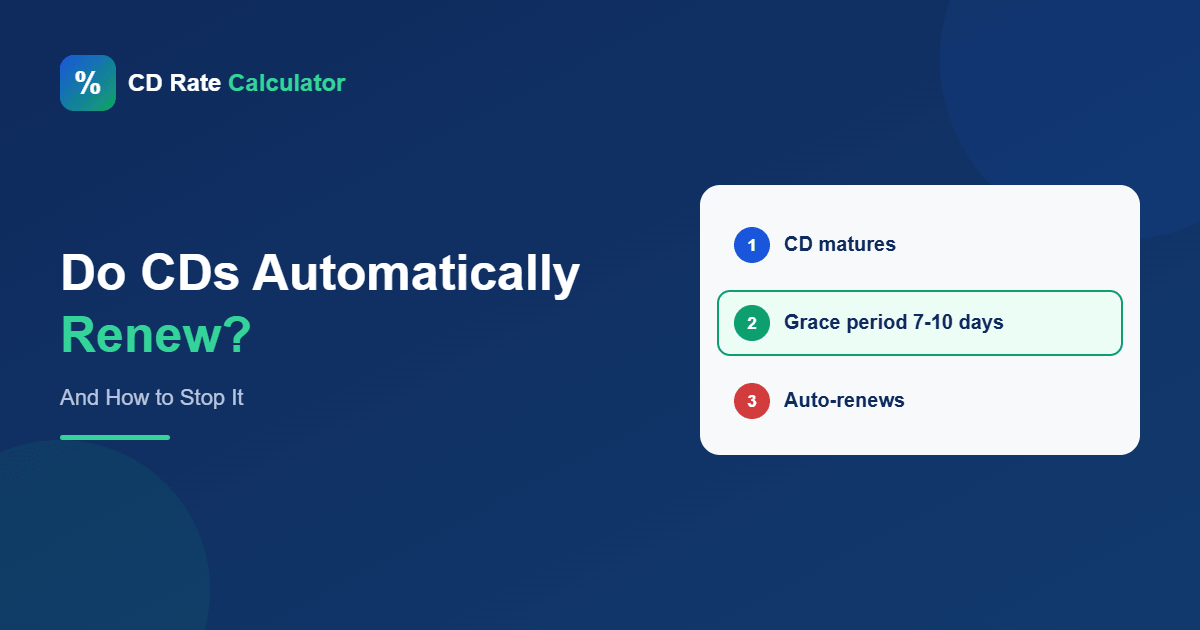
Quick answer: yes — at most banks, a CD automatically renews into the same term at the bank’s current rate unless you tell it otherwise during the grace period (usually 7-10 days after maturity). You can stop auto-renewal, but you have to act. Find your exact maturity date with our free CD Maturity Date Calculator.
How CD Auto-Renewal Works
When your CD reaches maturity, the bank opens a short grace period — typically 7 to 10 days. During that window, your money is unlocked and you can withdraw it, add to it, change the term, or move it elsewhere, all penalty-free. If you do nothing before the window closes, the bank automatically rolls your entire balance — principal plus earned interest — into a brand-new CD of the same length, locked again at whatever rate the bank is offering that day.
What to Check Before Renewing a CD
Before allowing your CD to renew, take a few minutes to compare the new offer with other savings options. The renewal rate may look attractive at first, but the annual percentage yield, term length, and withdrawal rules all matter.
Check these details before making a decision:
- Renewal APY: Compare the new annual percentage yield with current CD rates from other banks and credit unions.
- New term length: Confirm whether the CD will renew for the same period or a different term.
- Early withdrawal penalty: Review how much you could lose if you need the money before the new maturity date.
- Interest payment option: Find out whether interest will be added to the balance, sent to another account, or paid on a regular schedule.
- Minimum balance requirement: Make sure the renewed CD still meets the bank’s minimum deposit rules.
- FDIC or NCUA coverage: Keep eligible deposits within insurance limits when you combine accounts at the same institution.
- Renewal deadline: Write down the final day of the grace period so you do not miss your opportunity to make changes.
A bank’s renewal notice should explain the new interest rate, maturity date, renewal terms, and grace-period rules. Read that notice carefully instead of assuming the new CD will work exactly like the old one.
Should You Renew or Move Your Money?
Renewing with the same bank can be convenient, but convenience is not always the most profitable choice. Another bank may offer a higher APY, a shorter term, or more flexible withdrawal rules. Even a small rate difference can add up when your deposit is large or the CD term lasts several years.
Why Auto-Renewal Can Cost You
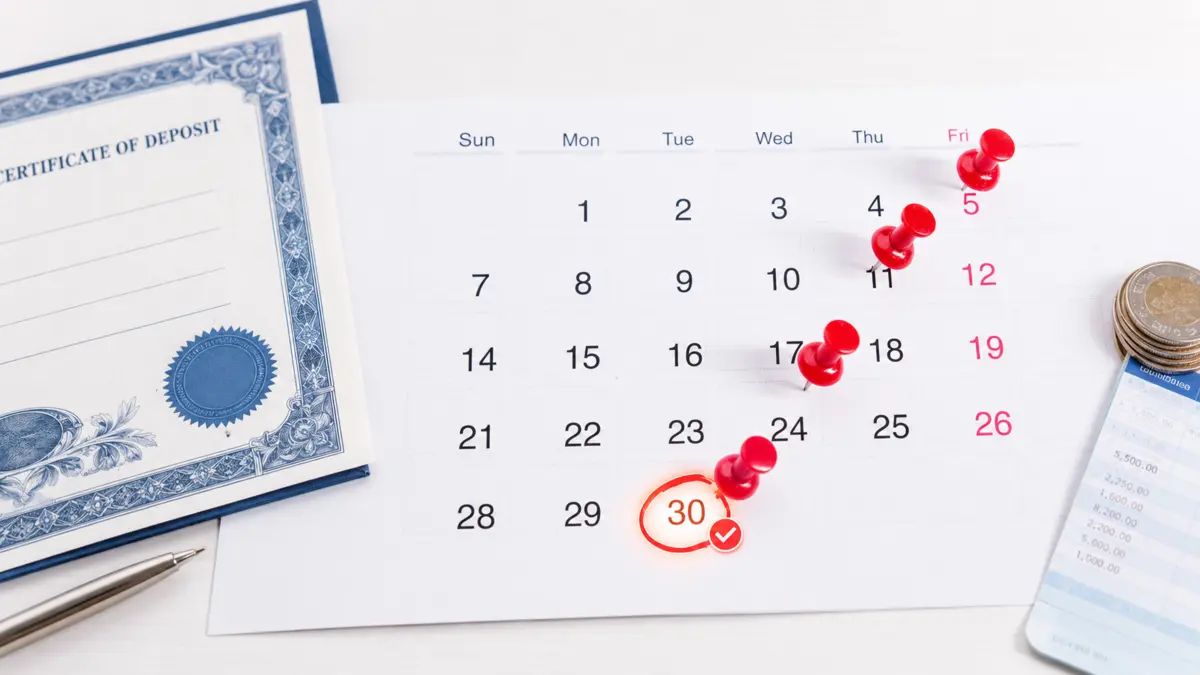
The renewal rate is rarely the bank’s best rate. If your original CD was a promotional offer, it almost never renews at the promo rate — it drops to the standard rate, which can be far lower. And because the money is now locked again, pulling it out means paying an early withdrawal penalty. Banks count on this inattention; “renewal inertia” is a known and profitable pattern in banking.
How to Stop a CD From Auto-Renewing
- Mark the maturity date. The moment you open a CD, put the date in your phone with a reminder a week early. Our maturity date calculator gives you the exact day.
- Set renewal instructions at opening. Many banks let you choose “do not renew — transfer to savings” right when you open the CD. Ask.
- Act during the grace period. Once the maturity notice arrives, decide: withdraw, renew at a better rate, or move banks. Bank transfers take 1-3 days, so start early in the window.
- If you missed it, ask anyway. Many banks will reverse a very recent auto-renewal for a polite customer — once. It costs nothing to call.
How a CD Ladder Can Help
A CD ladder divides your money among CDs with different maturity dates. Instead of locking your entire balance into one CD, you spread it across several terms. This creates regular opportunities to access cash or take advantage of new interest rates.
For example, you could divide your money into five CDs that mature one year apart. Each year, one CD becomes available during its grace period. You can then use the money, renew it, or place it into a longer-term CD.
A CD ladder may help you:
- Avoid locking all your money away at one interest rate.
- Create a predictable schedule for accessing funds.
- Reduce the risk of missing every opportunity when rates change.
- Balance long-term returns with short-term flexibility.
- Plan ahead for tuition, home repairs, travel, or retirement income.
A ladder does require more recordkeeping, so keep a list of each CD’s opening date, maturity date, APY, and renewal instructions.
What Are Your Options at Maturity?
Three choices, all penalty-free during grace: withdraw the money, renew the CD (ask for the bank’s current best rate, not the default), or move to a better CD elsewhere — the natural moment to start or extend a CD ladder. Full walkthrough in our guide on what happens when your CD matures.
FAQ
How long do I have before a CD auto-renews?
Usually 7 to 10 calendar days after maturity — the grace period. It ranges from about 5 to 14 days depending on the bank, and weekends count.
Can I turn off auto-renewal completely?
Yes. Most banks let you set “do not renew” instructions at opening or during the grace period, so the money moves to a linked account instead of rolling into a new CD.
What rate does a CD renew at?
The bank’s current standard rate for that term on the renewal date — not your old rate, and rarely a promotional rate. It can be higher or lower than what you had.
Does a renewed CD have a new penalty?
Yes — a renewed CD is a fresh term with a fresh early withdrawal penalty. Breaking it in the first days can even dip into principal, since little interest has accrued.
Never get caught by auto-renewal — check your exact maturity date with the free CD Maturity Date Calculator.
1 thought on “Do CDs Automatically Renew? (And How to Stop It)”
Comments are closed.